
Novel plant growth-promoting bacteria from Australian soil biodiversity: evaluation, understanding and application (UAD519)
START
November 29, 2021
FINISH
November 28, 2025
Summary
The project identified bacterial strains that can promote wheat growth and improve yield by up to 30 per cent under stressful conditions. Researchers collected 1,325 bacterial isolates from 71 agricultural soils and screened these alongside 34 reference strains. This produced a core collection of 110 strains with confirmed growth-promoting traits. Field testing at Kapunda and Waikerie found that two strains increased wheat grain yield by about 30 per cent under the harsh, lower rainfall conditions tested at Waikerie. No yield benefit was measured at the higher rainfall Kapunda site, showing that the value of these bacteria may be greatest when crops are under environmental stress.
Background
Plant growth-promoting bacteria (PGPB) are naturally occurring soil bacteria that can enhance plant growth and help crops cope better with environmental stresses. Potential mechanisms include producing plant hormones, improving nitrogen supply, making phosphorus more readily available and helping plants manage stress. Australian soil bacteria with the potential to promote plant growth have not been well identified, characterised or screened for use in wheat crops. Once a collection of plant growth-promoting bacteria from Australian wheat growing soils is established, isolates can be screened under controlled and field conditions. Strains with the potential for commercial development can then be identified.
Research Aims
The core objectives of the project were to:
• Establish a diverse collection of plant growth-promoting bacteria from Australian wheat-growing soils.
• Screen bacterial isolates for direct plant growth-promoting effects under controlled conditions.
• Evaluate selected strains for effects on wheat performance under field conditions.
• Identify elite bacterial strains suitable for larger field trials and potential commercial development.
In The Field
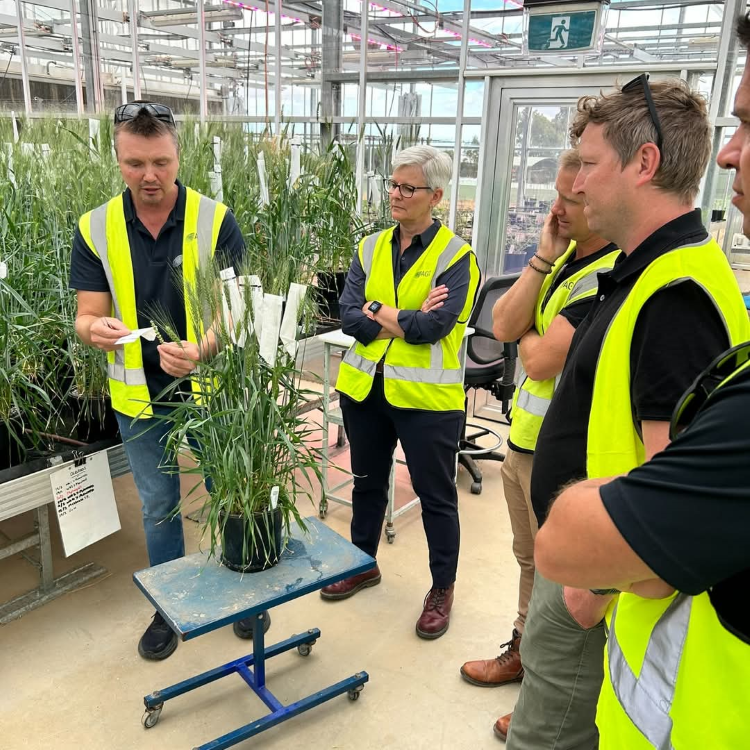
Wheat (Scepter) was grown in 71 Australian agricultural soils under controlled conditions. Researchers collected bacteria from the wheat roots and surrounding soil three weeks after sowing. A total of 1,325 isolates of potential plant growth-promoting bacteria (PGPB) were isolated, purified and catalogued. In addition, 34 reference strains were included from previous collections and commercial Bacillus-based product, giving a total of 1,359 strains.
All strains were screened in sterilised sand in controlled pot trials to identify bacterial strains that consistently showed growth-promoting characteristics. Crop growth measurements were collected 14 days after sowing.
The project identified bacterial strains that can promote wheat growth and improve yield by up to 30 per cent under stressful conditions. Researchers collected 1,325 bacterial isolates from 71 agricultural soils and screened these alongside 34 reference strains. This produced a core collection of 110 strains with confirmed growth-promoting traits. Field testing at Kapunda and Waikerie found that two strains increased wheat grain yield by about 30 per cent under the harsh, lower rainfall conditions tested at Waikerie. No yield benefit was measured at the higher rainfall Kapunda site, showing that the value of these bacteria may be greatest when crops are under environmental stress.
The researchers then established a core collection of 110 strains for more detailed investigation. The bacterial strains were tested for traits that could promote wheat growth, including producing plant growth hormones, improving nitrogen supply, maintaining root growth under stress, and releasing phosphorus into a form that plants can use. The bacteria were also identified to species level.
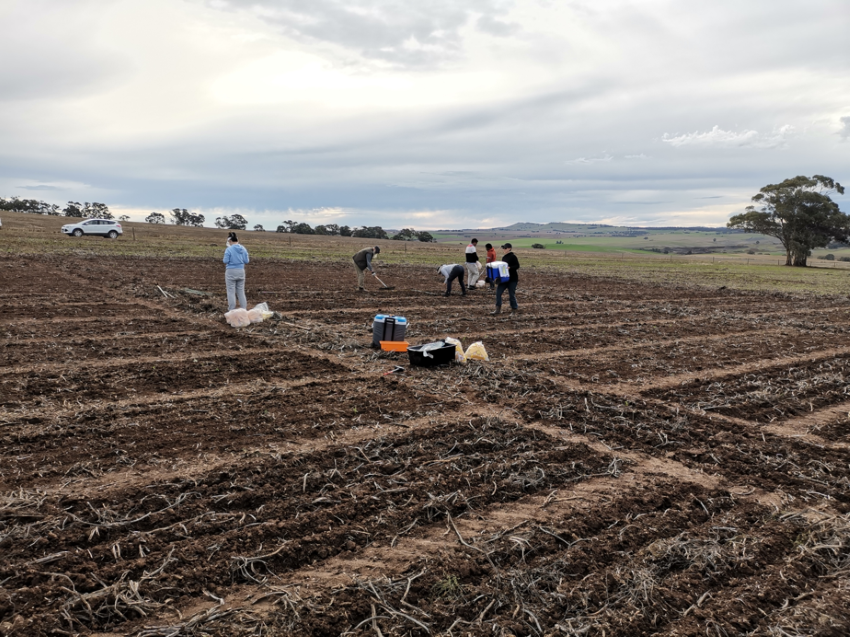
Selected strains were subsequently tested in field trials in two contrasting rainfall and soil fertility conditions typical of South Australian grain regions – a higher rainfall environment at Kapunda and lower rainfall environment at Waikerie. Large-plot trials were used to determine whether the benefits observed under controlled conditions translated into increased wheat grain yield.
Results
The screening program narrowed the large collection of bacteria to 110 strains with confirmed plant growth-promoting traits. This provides a resource for further research into bacterial inoculants suited to Australian cropping systems.
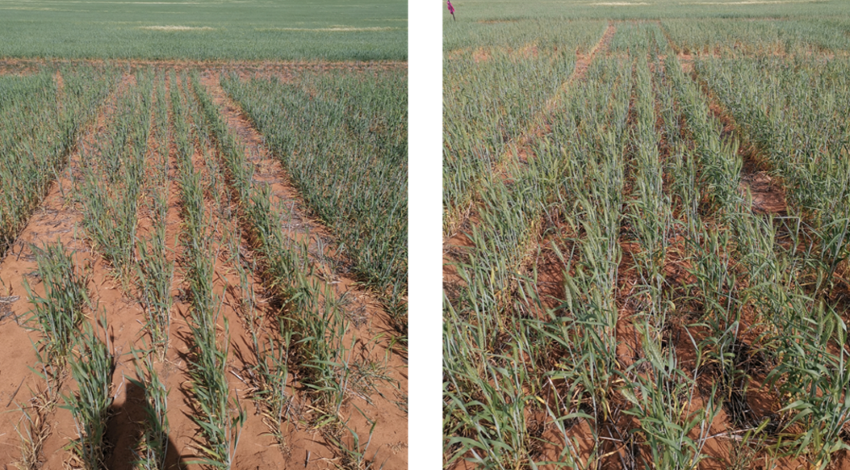
The most significant result came from the Waikerie field trials. Two bacterial strains increased wheat grain yield by about 30 per cent under the low-rainfall conditions tested at Waikerie. This indicates that some PGPB can improve crop performance when wheat is exposed to environmental stress.
However, the same yield response was not observed at Kapunda under more favourable growing conditions. This contrast between sites is important, indicating that the bacteria did not increase wheat yield potential in all environments. The main value of PGPB may be in helping plants maintain growth and yield when conditions are stressful.
Project Participants
ADELAIDE UNIVERSITY: A/Prof Matthew Denton, Dr Yi Zhou, Dr Maarten Ryder, Prof Tim Cavagnaro, Dr Ruey Toh, Dr Jiayu Li, postgraduate students and technical staff
The Problem
Beneficial soil bacteria may improve wheat growth, but few Australian strains have been identified, characterised or tested for use in wheat
The research
Researchers screened Australian soil bacteria to identify strains that could promote wheat growth and improve performance under South Australian conditions
More information
Value for Growers
The research provides a potential new approach to improving wheat resilience in South Australian environments. The strongest benefit recorded was under harsh, low-rainfall conditions, suggesting future bacterial inoculants could improve resilience in environments where crops regularly experience water or other environmental stress.
The collection of promising bacterial strains provides a strong foundation for the potential development of climate-resilient wheat inoculants for South Australian growers.
Further field validation is needed to establish where elite strains work reliably, how they should be applied, and how consistently they perform across seasons, soil types and management systems.
This project has co-investment from the Australian Research Council (LP200200813 – A soil ecological approach to increasing Australian crop productivity).

