
Current Projects
Apply for funding
Key Dates
Reporting
Research Projects
Apply for funding
Key Dates
Reporting
Research Projects
Current Research Projects
Multi-scale monitoring of pests and beneficial insects in canola cropping (UAD1424)
This PhD project will look to develop multi-scale (regional to paddock scale) monitoring methods for canola pests and beneficials, both pre-season and during season. The results will allow for improved risk analysis and decision making for integrated pest management by farmers and agronomists, avoiding over-use of insecticides.
The impact of annual ryegrass seed size on harvest weed seed control mill efficacy (TCO6424)
This project will quantify the variability in seed weight from field samples of the weed annual ryegrass (Lolium rigidum) and quantify how seed weight of annual ryegrass impacts the efficacy of harvest weed seed control (HWSC) impact mills.
Making the most of phosphorus(P) fertiliser inputs: Managing spatial variability and long-term strategies (TCO6024)
The overall aim of this project is to increase the profitability from phosphorus (P) fertiliser applications and determine sustainable P fertiliser strategies. This project focuses on two key P management areas: improving applications in variable paddocks/landscapes and refining long-term P management strategies on highly P responsive soils. This project will build on the results from SAGIT projects TC219 and TC221. This project is a co-investment, with GRDC providing 50% of the total funding.
Drought preparedness using barley architecture and phenology for biomass production (SAR5124)
The project aims to better understand the plant characteristics, including phenology and architecture, required to maximise biomass production for barley in grazed, grain and opportunistic grain and grazed scenarios across variable rainfall seasons. A diverse set of elite and novel varieties will be tested by different simulated grazing treatments across low, medium and high rainfall zones of South Australia.
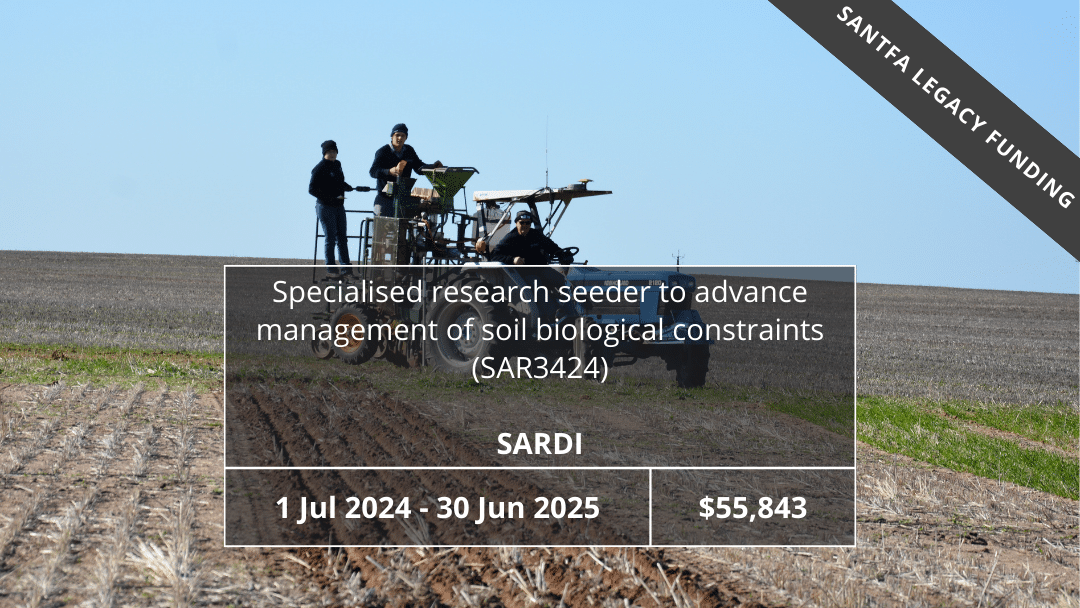
Specialised research seeder to advance management of soil biological constraints (SAR3424)
Field research projects on the management of soilborne diseases and rhizobia are severely constrained by the limitations of current research seeders. The development of a specialised research seeder will enable SA researchers to undertake world leading research to develop innovative practices to manage soil biological constraints in broadacre crops. This project is for Stage 1 of a three-stage process to 1. review, 2. design and 3. build a state-of-art research seeder.
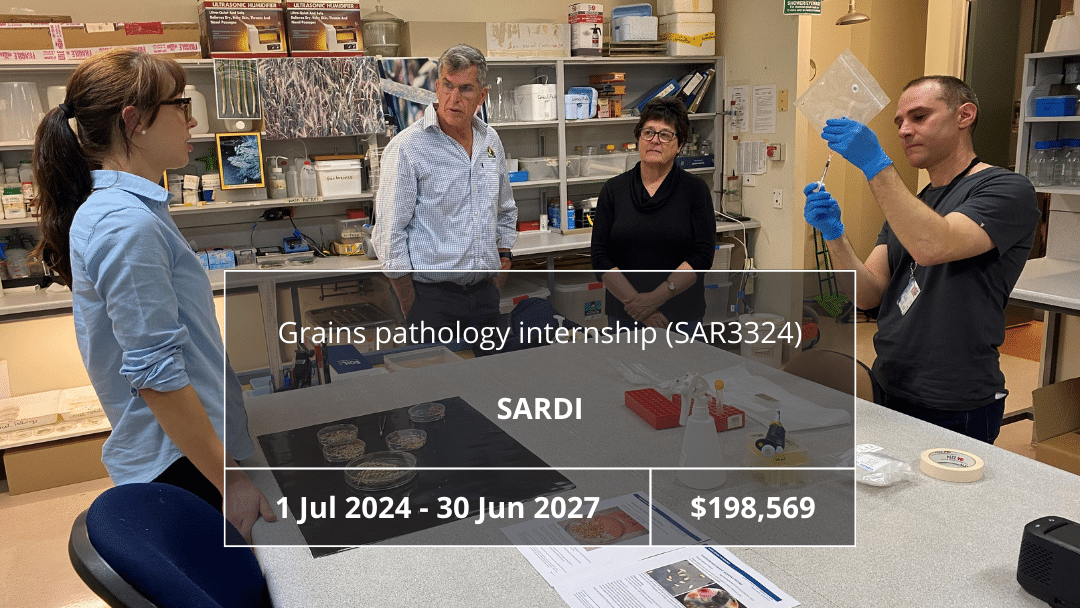
Grains pathology internship (SAR3324)
The project will support a Grains Pathology Trainee to be mentored by experienced staff from the grains pathology teams within SARDI Crop Sciences’ Plant Health and Diagnostics program. The mentoring will include laboratory and field pathology training provided by SARDI cereal and pulse pathologists, extension of information through written means, such as SARDI’s Crop Watch, participation in regional field days, and other industry support for grains pathology diagnostics.
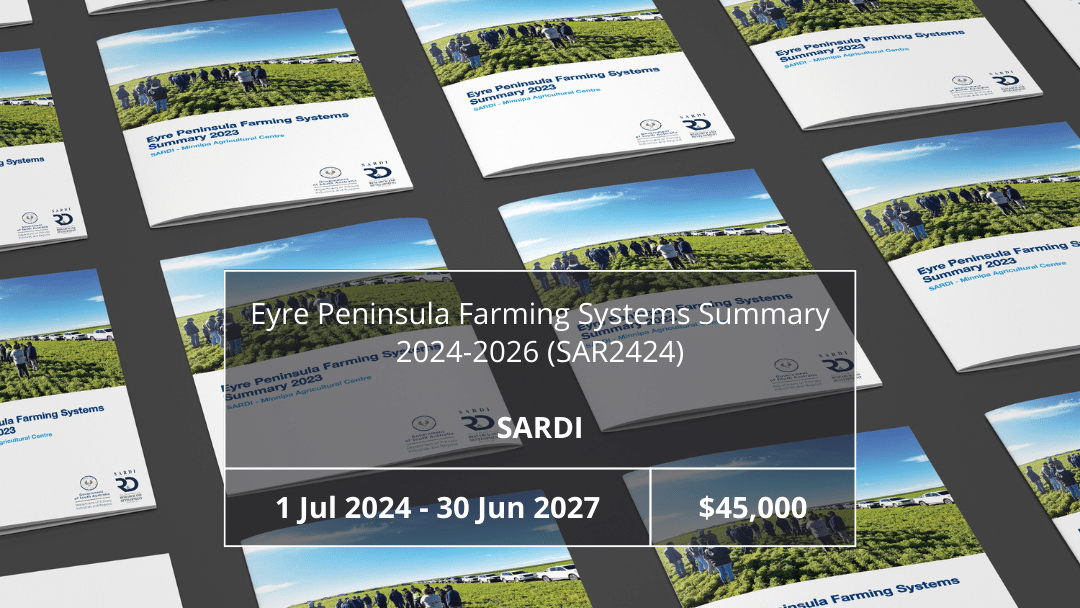
Eyre Peninsula Farming Systems Summary 2024-2026 (SAR2424)
This project will provide partial cost for the printing and development of the Eyre Peninsula Farming Systems Summaries 2024, 2025 and 2026, enabling continued distribution of this important summary to all growers, industry representatives, researchers and consultants on EP. The Eyre Peninsula Farming Systems Summary is an annual publication consisting of research results undertaken on EP and other areas of relevance, and their implications to upper EP farming systems.
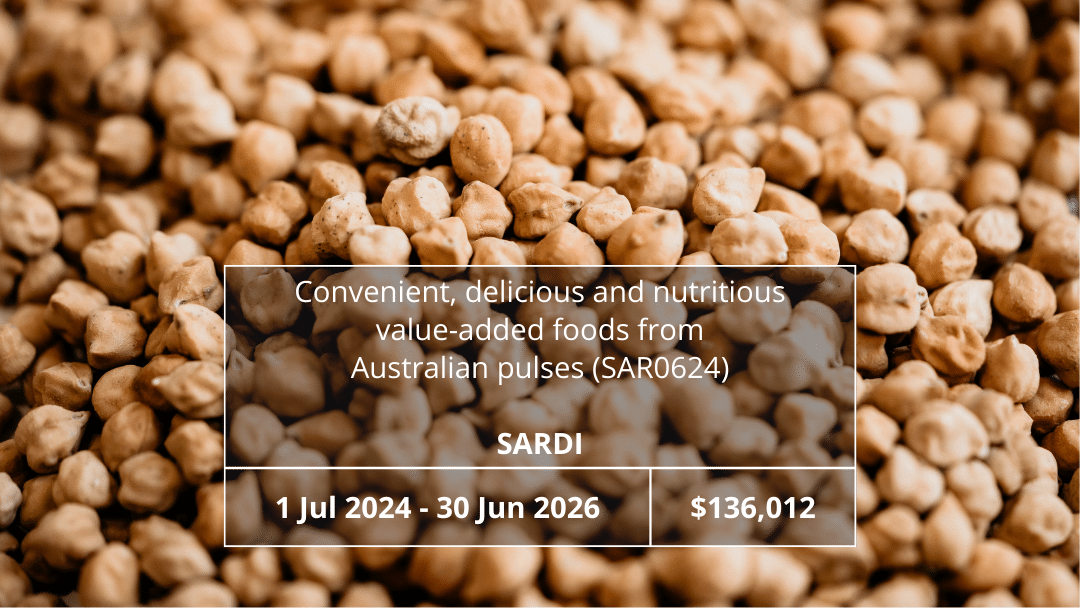
Convenient, delicious and nutritious value-added foods from Australian pulses (SAR0624)
This project aims to use a range of local pulses to make a range of attractive, delicious, nutritious and convenient pre-cooked food products that have wide appeal. This will include determining the appropriate processing steps for each grain type that would work in a commercial food manufacturing set-up to achieve acceptable grain texture and provide long shelf-life in can and/or pouch formats. The proof-of-concept products will be packaged in a variety of formats and tested with consumers, food manufacturers and food retailers.
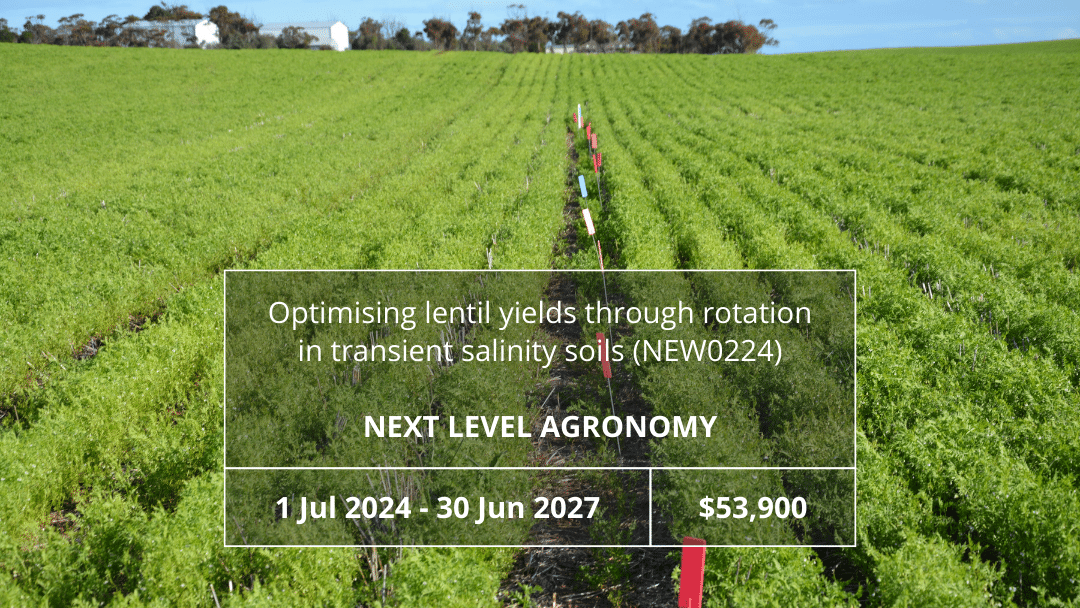
Optimising lentil yields through rotation intransient salinity soils (NEW0224)
This project aims to make transient saline soils more productive again for growing lentils through the use of a chemical fallow phase of the rotation. The fallow allows both soil moisture to be conserved through stubble load, helping for lentil establishment, and will also aim to reduce the area of saline affected soil for the following crops.
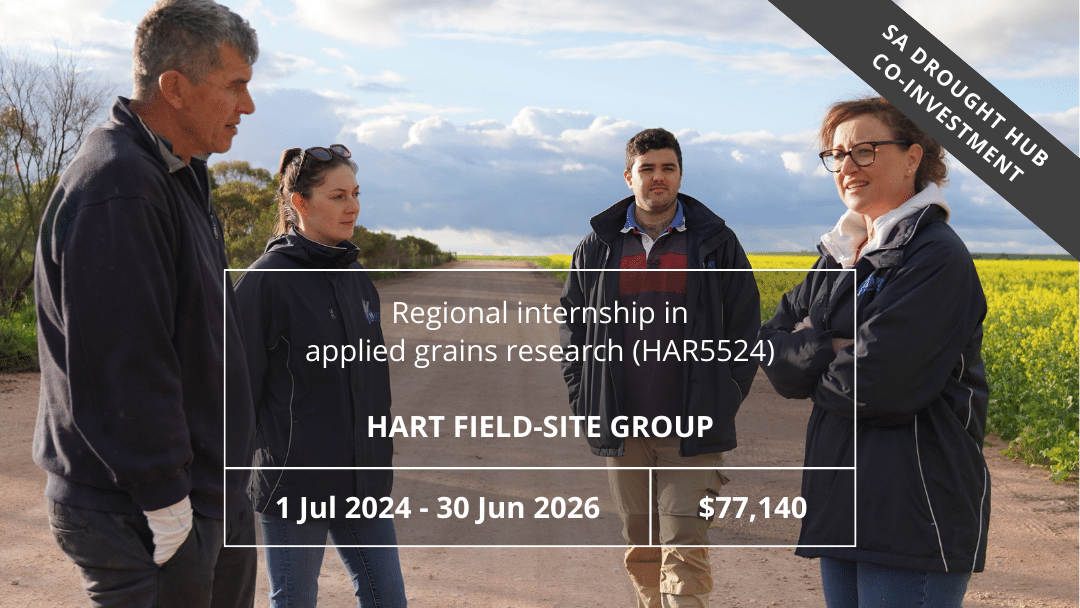
Regional internship in applied grains research (HAR5524)
This project offers a regionally based internship program, providing a stepping-stone for early career researchers to receive high quality training and hands-on experience to develop their research skills. This program supports young researchers interested in grains RD&E to pursue further research roles while increasing research capacity within the grains industry. This project is a co-investment, with the SA Drought Hub providing an additional $34,068 funding.
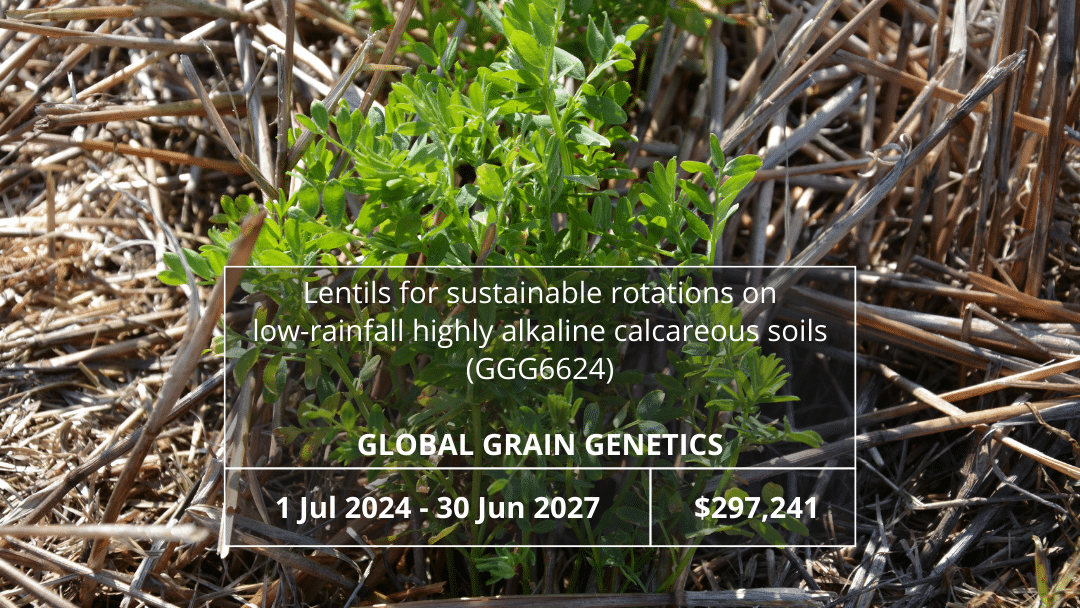
Lentils for sustainable rotations on low-rainfall highly alkaline calcareous soils (GGG6624)
This project will improve the sustainability of SA’s diverse and expansive low rainfall cropping areas by expanding lentil production, as a legume break crop for cereals, on highly alkaline calcareous soils in these regions. It will build on the recent successful research, extension and expansion of lentil through the low rainfall Mallee type areas across South Australia, by targeting constraints to profitable production with a focus on the Upper Eyre Peninsula (UEP).
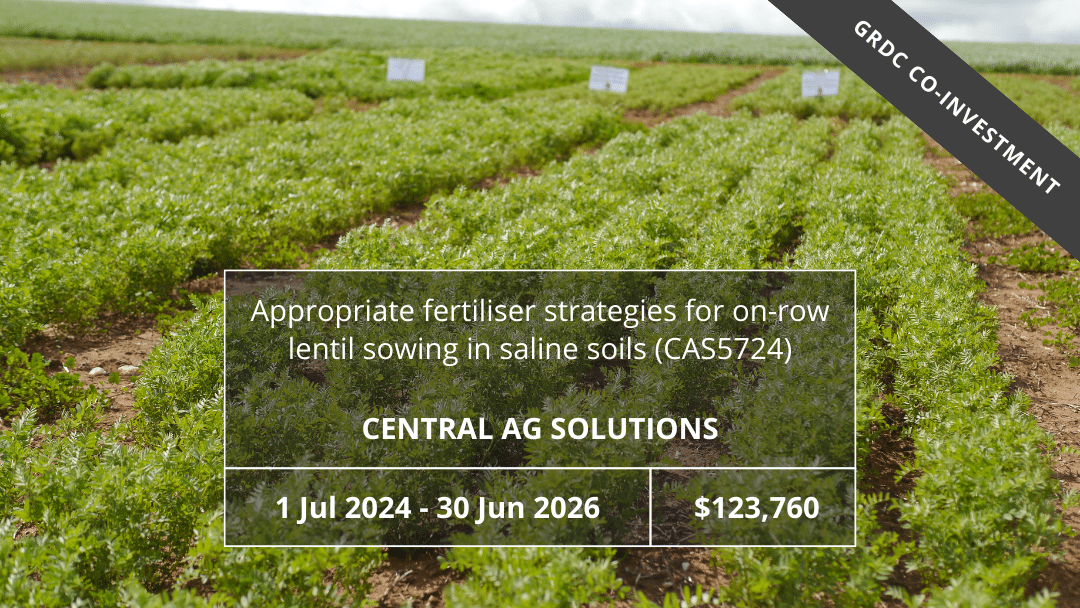
Appropriate fertiliser strategies for on-row lentil sowing in saline soils (CAS5724)
This project aims to determine the residual benefit of on-row and off-row sowing and appropriate fertiliser strategies for sensitive lentil crops in phosphorus deficient and moderately saline calcareous soil types of Yorke Peninsula. Research will investigate management techniques of utilising residual phosphorous in a cereal phase along with phosphorous placement at seeding to optimise lentil grain yields and economic returns. This project is a co-investment, with GRDC providing 50% of the total funding.
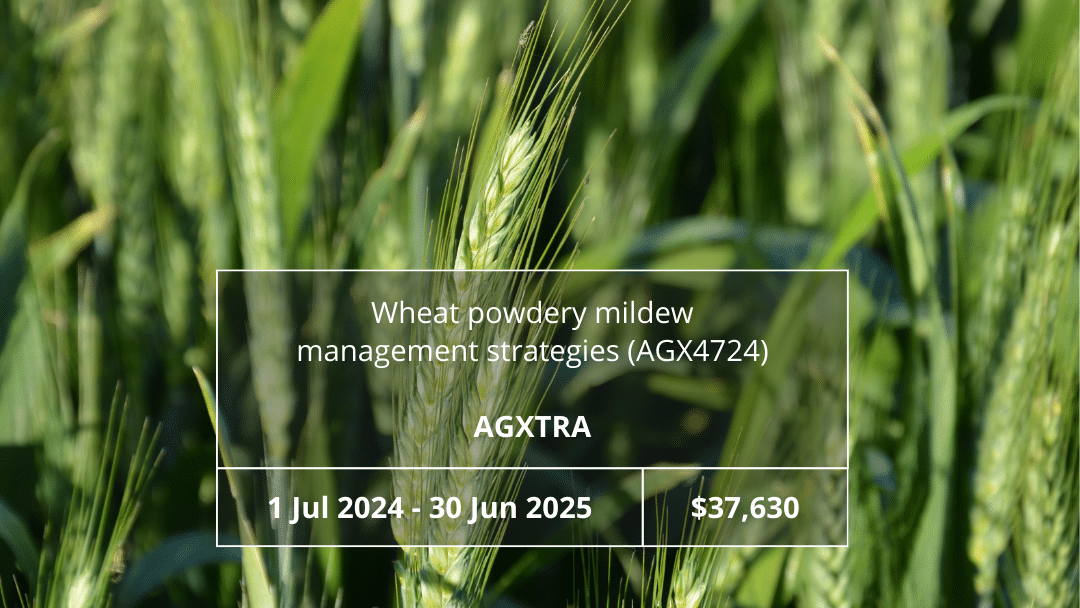
Wheat powdery mildew management strategies (AGX4724)
This project aims to demonstrate to growers and agronomists the effectiveness of existing and emerging wheat powdery mildew (WPM) control options across varieties with diverse susceptibility ratings. It will also raise awareness of the importance of cultural considerations with regards to WPM management and an understanding of pathogen resistance to commonly used fungicides. This project provides an opportunity to extend existing knowledge generated through current SAGIT-funded WPM projects.
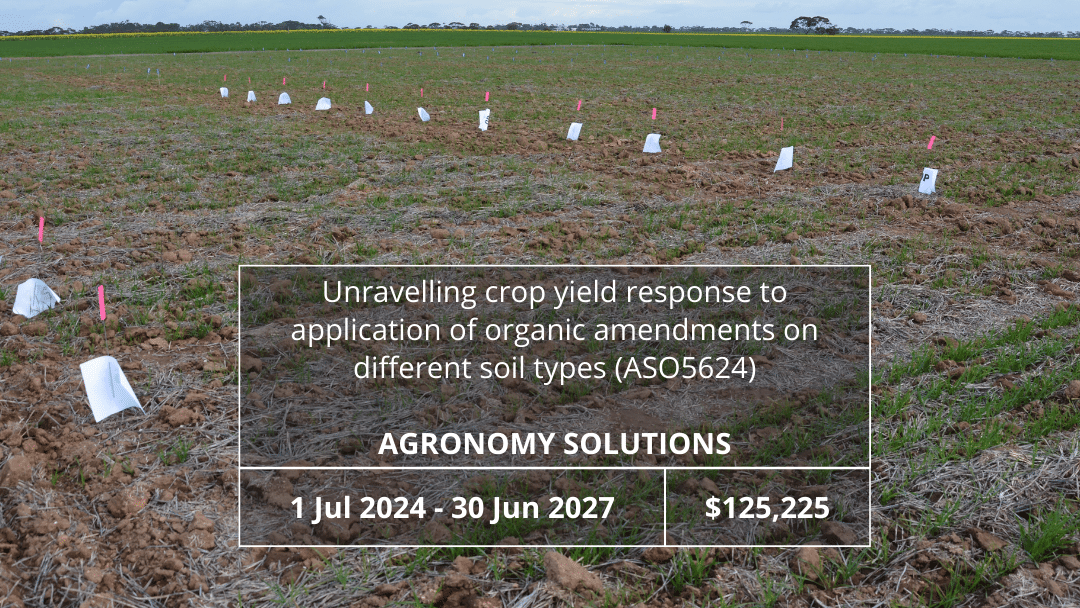
Unravelling crop yield response to application of organic amendments on different soil types (ASO5624)
This project aims to assess the impact of organic amendments on soil condition and crop response on three contrasting soil types. Through this process, the aim is to provide growers with recommendations on ‘target soils’ where organic amendment applications can provide maximum benefit. Researchers will endeavour to define suitable frequency and application rates of organic amendments in combination with inorganic fertiliser.
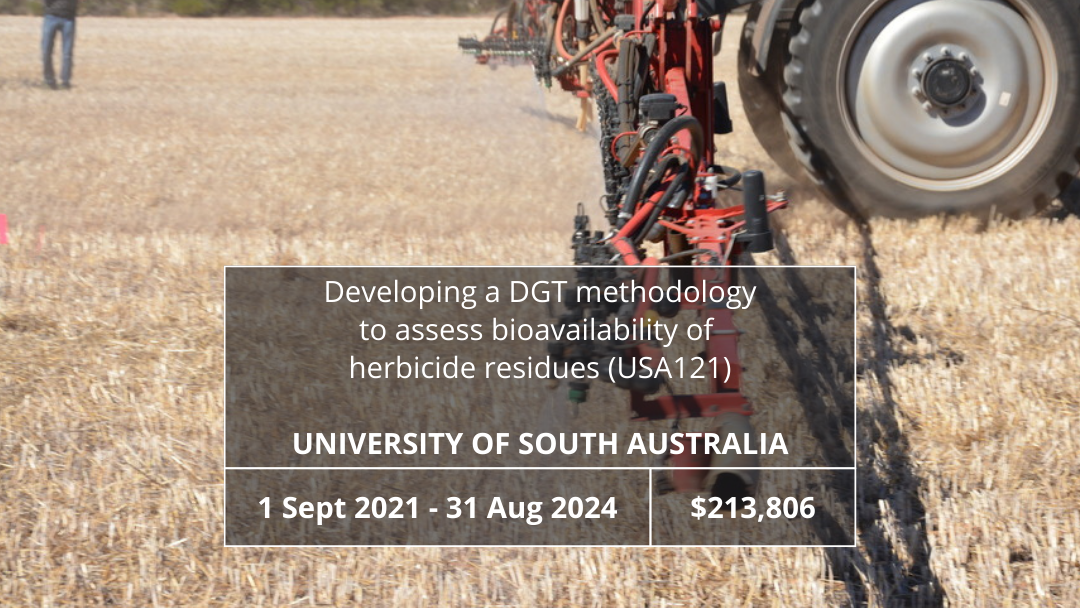
Developing a DGT methodology to assess bioavailability of herbicide residues (USA121)
A robust testing system for imidazolinone residues is to be developed using Diffusive Gradient in Thin-Films (DGT) technology. This tool will provide information on bioavailability of herbicide residues independent of soil type characteristics. The DGT tool will be validated in spiked soils, in a range of soil types and two water regimes. The DGT tool for glyphosate residue is also to be assessed.
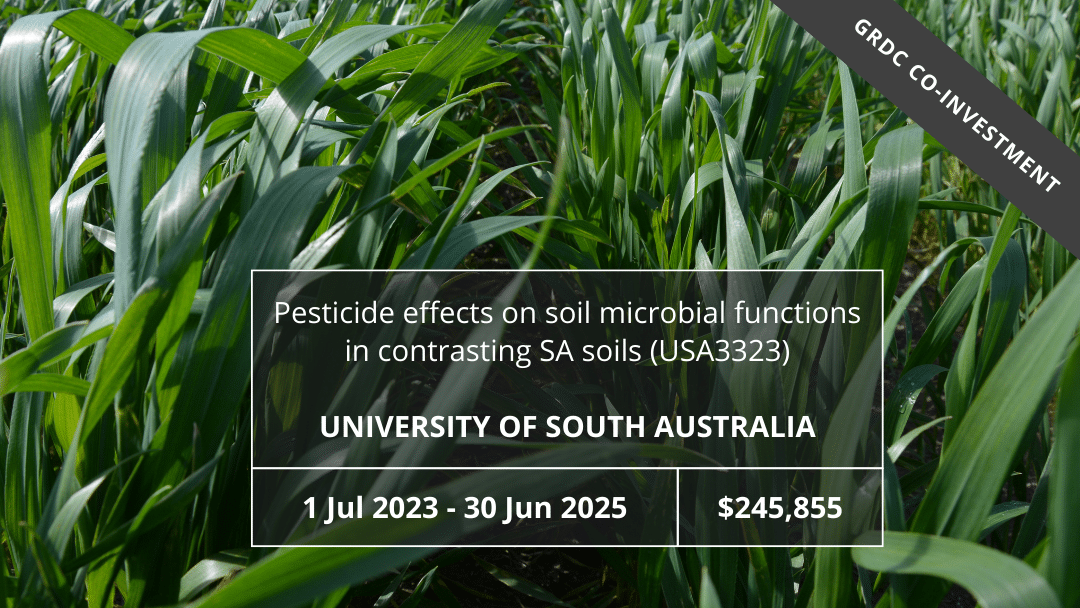
Pesticide effects on soil microbial functions in contrasting SA soils (USA3323)
The aim of this project is to understand how soil properties influence the effects of pesticides on soil health. The project team will assess six targeted pesticides in 10 contrasting South Australian broadacre cropping soils. This knowledge will deliver farmers essential information for identifying the best pesticide-soil combinations to maintain healthy soil microbial communities.
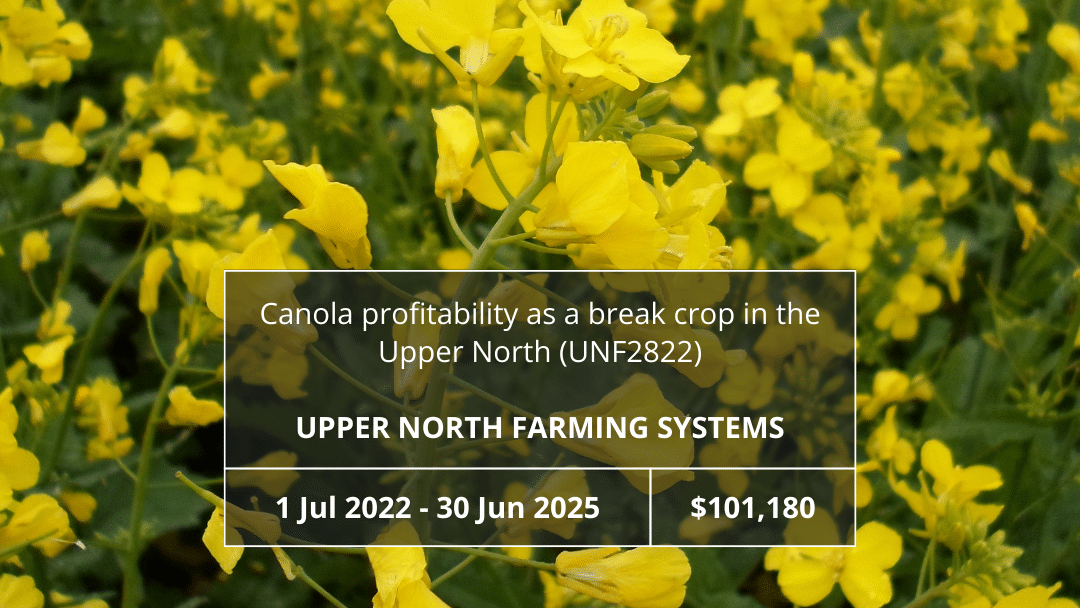
Canola profitability as a break crop in the Upper North (UNF2822)
This project aims to explore if new canola technology allows it to be a more reliable and viable break crop option in the Upper North agricultural zone. The project will assess the profitability of different canola agronomy packages in local validation trials (GM vs open pollinated TT) against wheat over a three-year period.
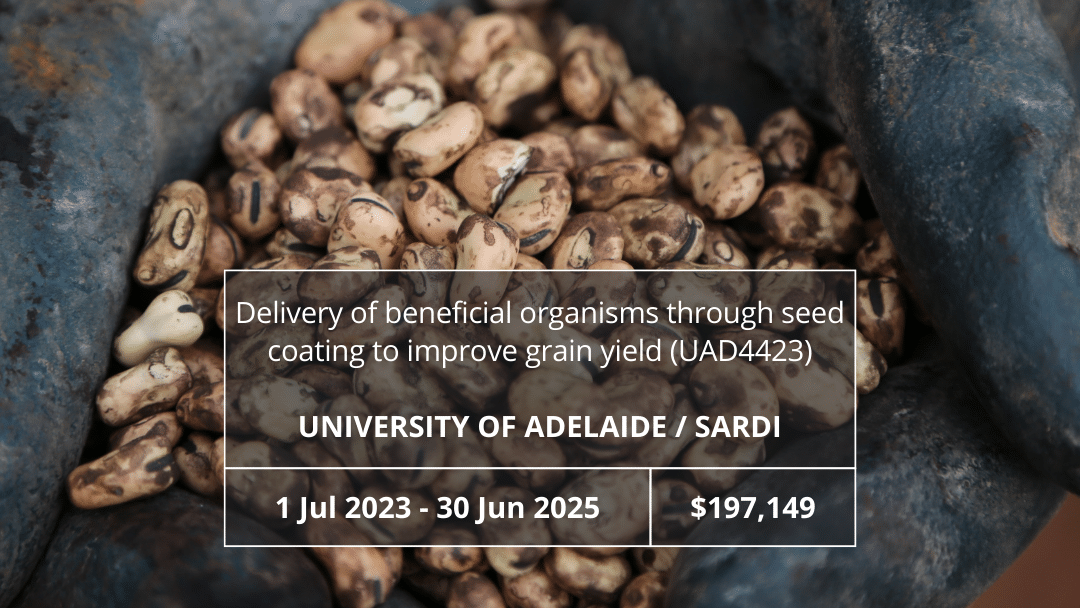
Delivery of beneficial organisms through seed coating to improve grain yield (UAD4423)
This is a pilot project focused on seed quality improvement and enhanced grain production in wheat, barley, chickpea and canola as major diverse crops in SA. This will be achieved by generating new formulas for seed coating that enhance the delivery of Trichoderma, mycorrhizal fungi and other beneficial microbes, nutrients and other effective additives.
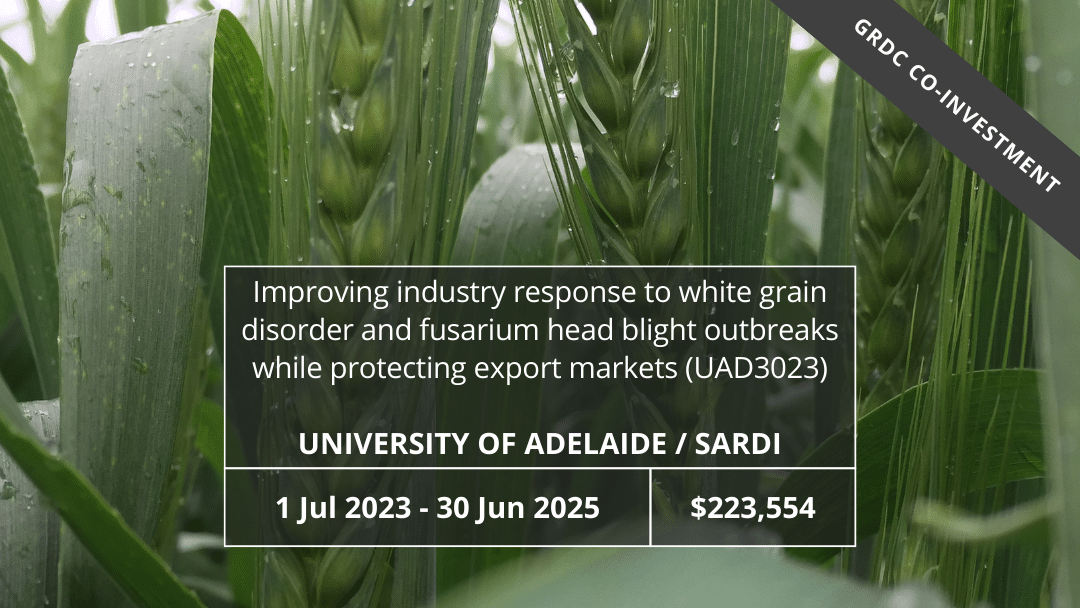
Improving industry response to white grain disorder and fusarium head blight outbreaks while protecting export markets (UAD3023)
This project will be undertaken by SARDI researchers and aims to improve industry preparedness for dealing with white grain disorder and fusarium head blight to reduce rejection and down-grading of grain at silos while protecting SA’s export markets. Grain samples, trial data, spore trapping data and weather data will be utilised.
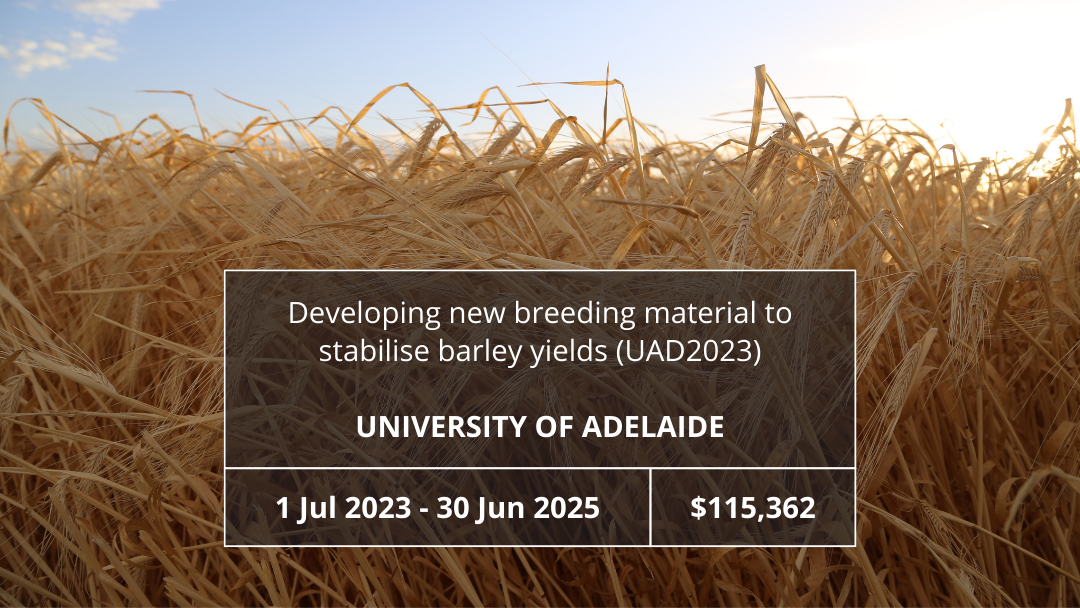
Developing new breeding material to stabilise barley yields (UAD2023)
South Australian crops can be severely impacted by poor and variable growing conditions, which includes low-fertility soils. Crop plants possess strong instincts to reduce grain number due to variable growing conditions or reduced fertiliser. This is a major contributor to the yield gap in SA. This project seeks to help close this yield gap through the import and testing of new genetic material that makes barley less responsive to environmental conditions.
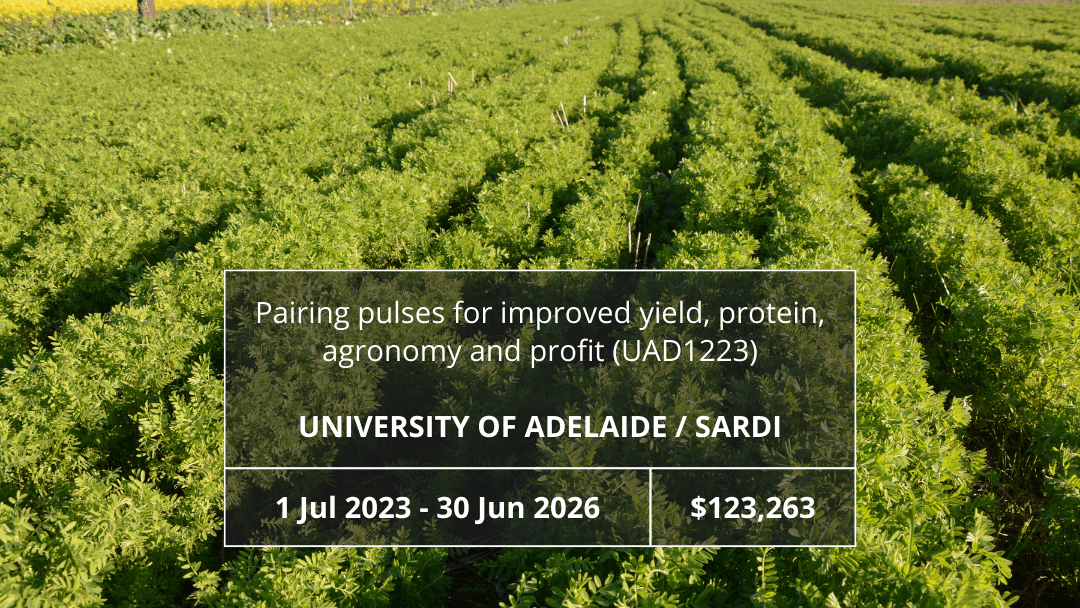
Pairing pulses for improved yield, protein, agronomy and profit (UAD1223)
This project will be undertaken by SARDI researchers and will investigate if the pairing of faba bean and semi-leafless field pea will benefit both crops by increased seed and protein yield; reduced lodging, disease and harvestability issues; and improved yield and reduced N fertiliser cost of the following wheat crop. This system could increase faba bean representation in more marginal areas and increase yield in drier seasons as field pea is better adapted to drier conditions.
MacKillop Farm Management Group Annual Trial Results Book 2023-2025 (MFM2123)
To fund compilation of MacKillop Farm Management Group Annual Trials Results book for trials undertaken in 2023, 2024 and 2025. The book will be available in March the following year.

AgXtra high school and university crop competition (AGX3822)
A wheat production competition for high school students and university agricultural students which promotes agriculture as a career choice to high school students and engages tertiary students with agribusiness and consultants for career option awareness.

Genetic and fungicidal control of Septoria tritici blotch and stripe rust in wheat (AGX4223)
This project will seek to evaluate the effectiveness of various fungicide treatments for control of Septoria tritici blotch and stripe rust in a range of wheat varieties with differing levels of resistance at different rainfall zones. It will also determine the genetic influence of yield loss from disease and find a suitable application package of fungicide to reduce the cost of production.