The aim of this project is to understand how soil properties influence the effects of pesticides on soil health. The project team will assess six targeted pesticides in 10 contrasting South Australian broadacre cropping soils. This knowledge will deliver farmers essential information for identifying the best pesticide-soil combinations to maintain healthy soil microbial communities.
Posts Tagged - New in 2023
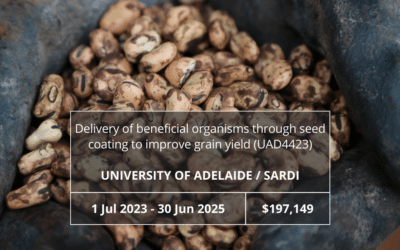
Delivery of beneficial organisms through seed coating to improve grain yield (UAD4423)
Nov 23, 2023 | Current Projects
This is a pilot project focused on seed quality improvement and enhanced grain production in wheat, barley, chickpea and canola as major diverse crops in SA. This will be achieved by generating new formulas for seed coating that enhance the delivery of Trichoderma, mycorrhizal fungi and other beneficial microbes, nutrients and other effective additives.
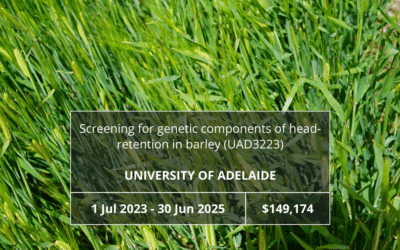
Screening for genetic components of head retention in barley (UAD3223)
Nov 23, 2023 | Current Projects
Barley head loss is an ongoing issue that leads to reduced yield based on environmental factors and cultivar sensitivity. Although management options exist, improved genetic solutions are needed to limit the seasonal and site variability. In this project, researchers will extend current knowledge of head loss management and peduncle structure to consider new cultivars and candidate genes that might influence head retention.
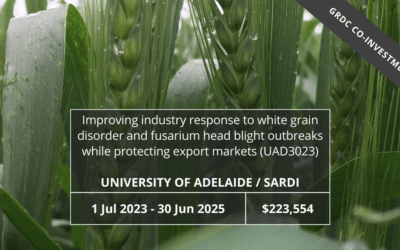
Improving industry response to white grain disorder and fusarium head blight outbreaks while protecting export markets (UAD3023)
Nov 23, 2023 | Current Projects
This project will be undertaken by SARDI researchers and aims to improve industry preparedness for dealing with white grain disorder and fusarium head blight to reduce rejection and down-grading of grain at silos while protecting SA’s export markets. Grain samples, trial data, spore trapping data and weather data will be utilised.
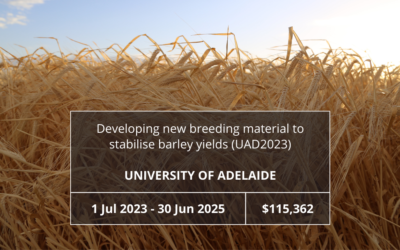
Developing new breeding material to stabilise barley yields (UAD2023)
Nov 23, 2023 | Current Projects
South Australian crops can be severely impacted by poor and variable growing conditions, which includes low-fertility soils. Crop plants possess strong instincts to reduce grain number due to variable growing conditions or reduced fertiliser. This is a major contributor to the yield gap in SA. This project seeks to help close this yield gap through the import and testing of new genetic material that makes barley less responsive to environmental conditions.