This project will quantify the variability in seed weight from field samples of the weed annual ryegrass (Lolium rigidum) and quantify how seed weight of annual ryegrass impacts the efficacy of harvest weed seed control (HWSC) impact mills.


This project will quantify the variability in seed weight from field samples of the weed annual ryegrass (Lolium rigidum) and quantify how seed weight of annual ryegrass impacts the efficacy of harvest weed seed control (HWSC) impact mills.
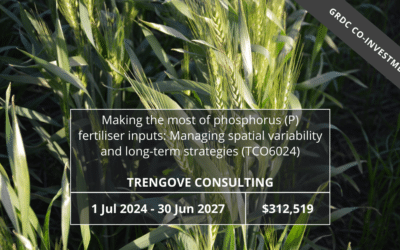
The overall aim of this project is to increase the profitability from phosphorus (P) fertiliser applications and determine sustainable P fertiliser strategies. This project focuses on two key P management areas: improving applications in variable paddocks/landscapes and refining long-term P management strategies on highly P responsive soils. This project will build on the results from SAGIT projects TC219 and TC221. This project is a co-investment, with GRDC providing 50% of the total funding.

The project aims to better understand the plant characteristics, including phenology and architecture, required to maximise biomass production for barley in grazed, grain and opportunistic grain and grazed scenarios across variable rainfall seasons. A diverse set of elite and novel varieties will be tested by different simulated grazing treatments across low, medium and high rainfall zones of South Australia.

Field research projects on the management of soilborne diseases and rhizobia are severely constrained by the limitations of current research seeders. The development of a specialised research seeder will enable SA researchers to undertake world leading research to develop innovative practices to manage soil biological constraints in broadacre crops. This project is for Stage 1 of a three-stage process to 1. review, 2. design and 3. build a state-of-art research seeder.

The project will support a Grains Pathology Trainee to be mentored by experienced staff from the grains pathology teams within SARDI Crop Sciences’ Plant Health and Diagnostics program. The mentoring will include laboratory and field pathology training provided by SARDI cereal and pulse pathologists, extension of information through written means, such as SARDI’s Crop Watch, participation in regional field days, and other industry support for grains pathology diagnostics.

This project will provide partial cost for the printing and development of the Eyre Peninsula Farming Systems Summaries 2024, 2025 and 2026, enabling continued distribution of this important summary to all growers, industry representatives, researchers and consultants on EP. The Eyre Peninsula Farming Systems Summary is an annual publication consisting of research results undertaken on EP and other areas of relevance, and their implications to upper EP farming systems.
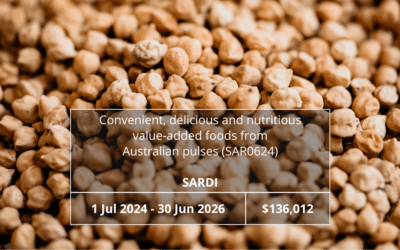
This project aims to use a range of local pulses to make a range of attractive, delicious, nutritious and convenient pre-cooked food products that have wide appeal. This will include determining the appropriate processing steps for each grain type that would work in a commercial food manufacturing set-up to achieve acceptable grain texture and provide long shelf-life in can and/or pouch formats. The proof-of-concept products will be packaged in a variety of formats and tested with consumers, food manufacturers and food retailers.
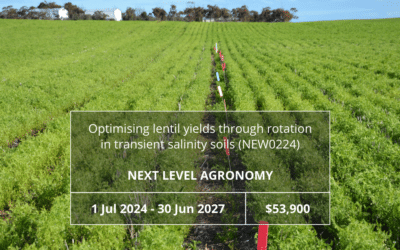
This project aims to make transient saline soils more productive again for growing lentils through the use of a chemical fallow phase of the rotation. The fallow allows both soil moisture to be conserved through stubble load, helping for lentil establishment, and will also aim to reduce the area of saline affected soil for the following crops.