
The goal of this project is to develop next-generation rhizobial inoculation systems for lentils by integrating advanced seed-coating technologies with climate-adapted plant growth-promoting bacteria. The project aims to deliver pre-inoculated, ready-to-sow lentil...
START
FINISH
Summary
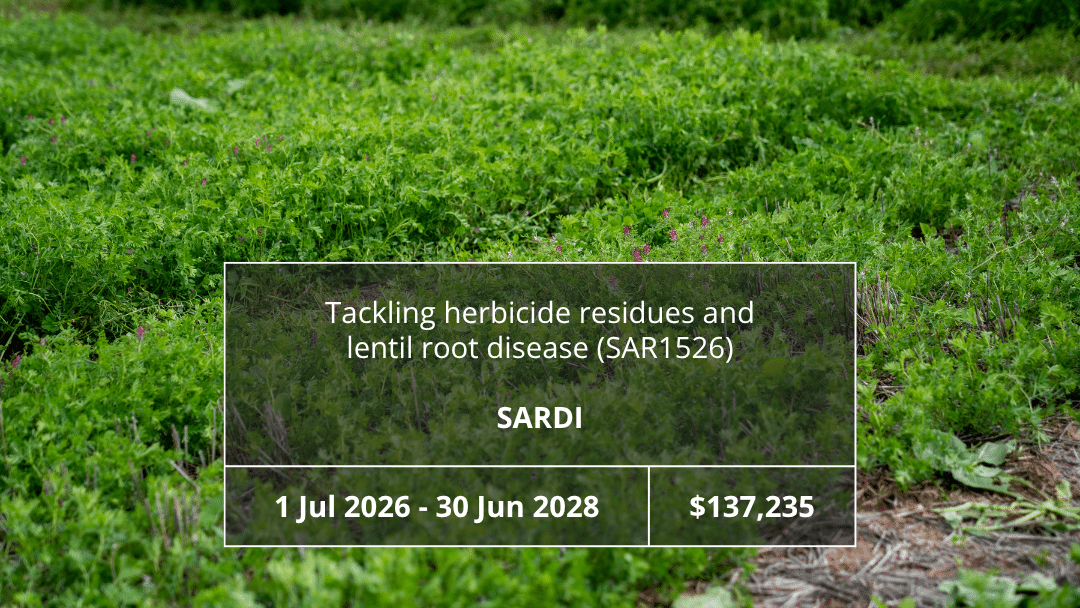
Lentil growing is increasing in SA, with farmers using shorter rotations which can lead to build up of root diseases. Dry summer conditions can result in increased risk of active herbicide residues present at seeding. When herbicide residues are combined with root disease, the effects may be stronger than either alone. This project aims to investigate the effects of common herbicide residues and lentil root rot disease on the growth and yield of lentil varieties.
Project Participants
Rebecca Tonkin, SARDI
The research
Lentil growing is increasing in SA, with farmers using shorter rotations which can lead to build up of root diseases. Dry summer conditions can result in increased risk of active herbicide residues present at seeding. When herbicide residues are combined with root disease, the effects may be stronger than either alone. This project aims to investigate the effects of common herbicide residues and lentil root rot disease on the growth and yield of lentil varieties.
Funding
$137,235
More information
Latest Research Projects
Novel plant growth-promoting bacteria to increase wheat productivity and NUE (UAD2426)
This project will evaluate the performance, stability, and nitrogen-use efficiency benefits of the previously selected high-performing plant growth-promoting bacterial strains across cropping environments relevant to SA growers. It will translate the results towards...
Optimising a DGT to predict the risk of IMI herbicide residues (UAD0626)
Herbicide residues such as those of imidazolinones (IMI) products are of increasing concern to growers. However, predictive tests to assess the potential toxicity of herbicide residues to crops are not currently available. This project will establish and validate a...


