This project aims to continue Hart’s current regional internship program in applied research and extension, relevant to the needs of the southern grains industry. The program will allow for the long-term succession of new graduates into the industry by creating awareness of field applied roles, leading to greater research capacity across the South Australian grains industry. This project is a co-investment, with SA Drought Hub providing $50,000 of the total funding.
START
FINISH
Summary
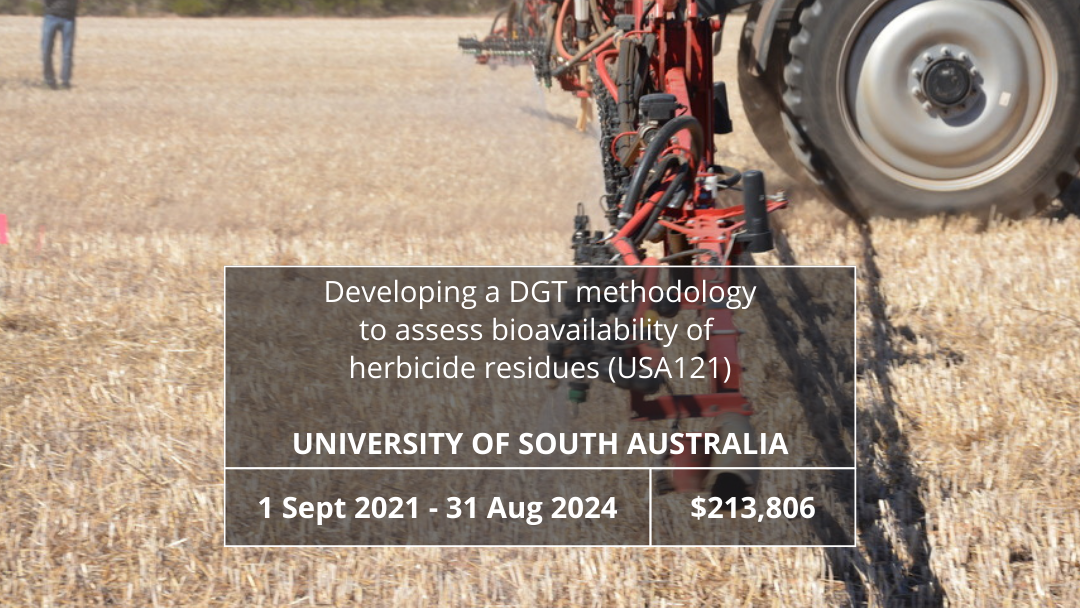
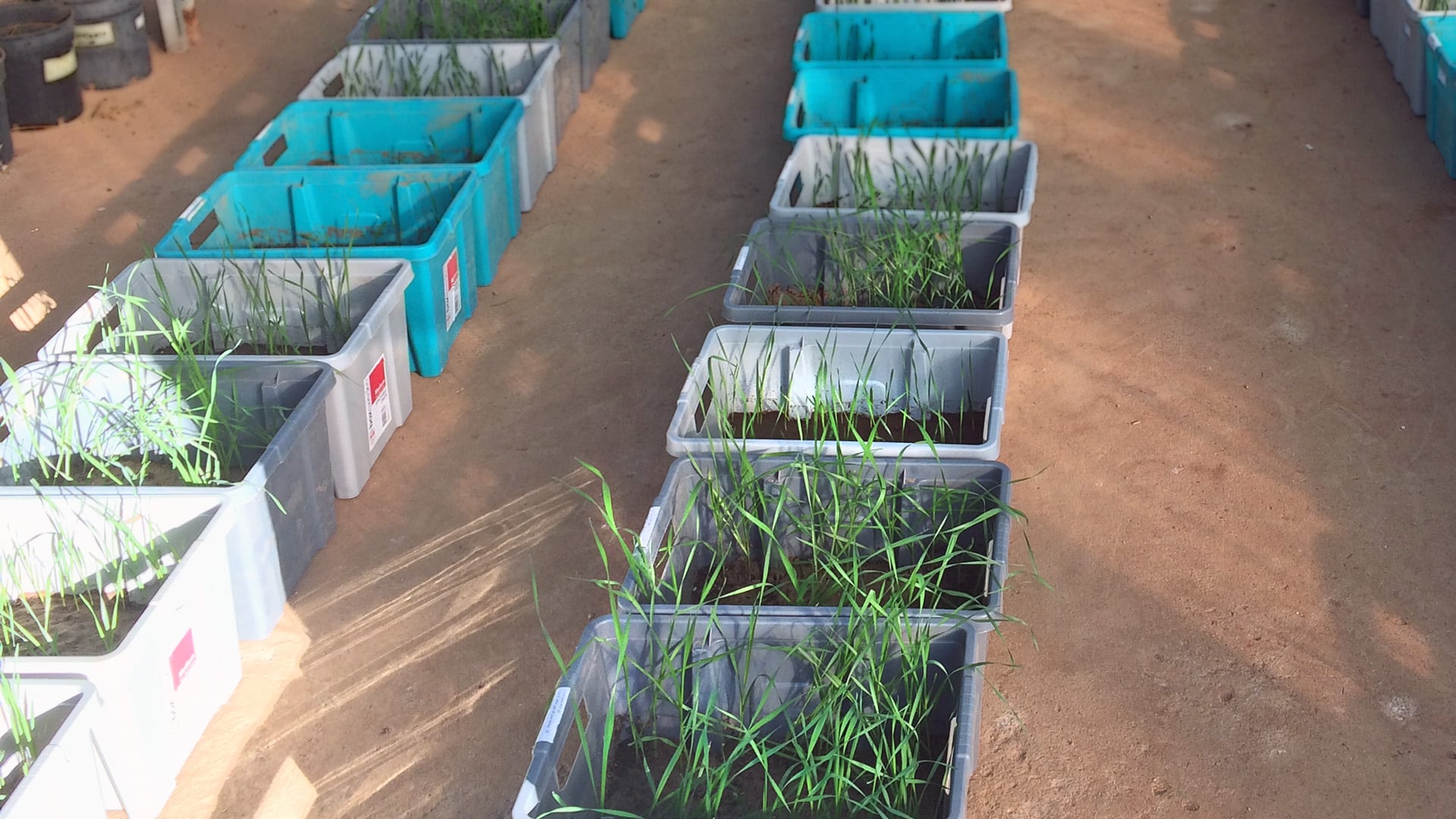
A robust testing system for imidazolinone residues is to be developed using Diffusive Gradient in Thin-Films (DGT) technology. This tool will provide information on bioavailability of herbicide residues independent of soil type characteristics. The DGT tool will be validated in spiked soils, in a range of soil types and two water regimes. The DGT tool for glyphosate residue is also to be assessed.
Project Participants
Enzo Lombi, University of South Australia
The research
A robust testing system for imidazolinone residues is to be developed using Diffusive Gradient in Thin-Films (DGT) technology. This tool will provide information on bioavailability of herbicide residues independent of soil type characteristics. The DGT tool will be validated in spiked soils, in a range of soil types and two water regimes. The DGT tool for glyphosate residue is also to be assessed.
Funding
$213,806
More information
Enzo Lombi
T: 08 8302 6267
E: [email protected]
Latest Research Projects
Developing carbon sequestration rules of thumb for farmers and advisors (SAR2025)
This project will investigate the effect spatial factors and sampling methodology have on soil carbon measurements. The results will be used to develop a “Rules of Thumb” for South Australian farmers and advisors who are considering entering into the carbon market. These rules of thumb will help to decide on the best soil carbon sampling strategy suited to individual farming systems and situations. This project is a co-investment with SARDI providing $20,000 of the total funding.
Student Compendium – supporting the next generation, 2026-2028 (AIA1925)
This project aims to support interns to develop and produce the next three versions of the Student Compendium (2026, 2027 and 2028); connect students to primary industries, and industry to students while assisting the next generation to find opportunities to broaden career horizons; and create an innovative, unique resource as a “call everyone to action” on all the SA Blueprints, particularly the SA Grains Industry Blueprint.